

Low-Code Isn't the Future — It's a Shortcut
Every few months a new low-code platform pops up promising to end coding forever.
You've seen the headlines — 'Build an app in a weekend!' 'No developer required!' 'AI will handle the rest.'
It sounds perfect. But here's the truth: low-code is a shortcut, not salvation.
Low-code tools are fantastic for testing ideas fast, creating investor demos, or spinning up internal dashboards.
But they are not replacements for real engineering. They're training wheels — and like all shortcuts, they end where the real work begins.
Why Founders Fall for the Low-Code Pitch
The appeal is obvious: building an app with drag-and-drop blocks or an AI assistant sounds easier than hiring a team.
And in the beginning, it is. You can see results fast — a prototype that looks real, buttons that work, maybe even data flowing.
But under that glossy surface, the trade-offs are hiding:
- You're not building a product — you're building inside a product.
- The moment you hit real traffic, you'll hit performance ceilings.
- You don't own your codebase, your backend, or your architecture.
- And once you need custom logic, real security, or integrations beyond what the platform offers? You'll start over.
Low-code is the illusion of progress — fast motion that doesn't always equal forward movement.
The Honest Framework: What Low-Code Is Actually Good For
Low-code isn't bad. It's just often misused. Here's where it actually shines:
✅ Idea Validation: Perfect for proving your concept visually or functionally.
✅ Investor Demos: You can show rather than tell — critical for early funding.
✅ Internal Tools: For managing data, tracking inventory, or automating repetitive admin tasks.
But low-code starts breaking the moment you need:
🚫 Custom user logic (e.g., role-based access, complex workflows)
🚫 Real scalability (thousands of users, complex APIs)
🚫 Ownership and security (you can't export what you don't own)
Use it for validation, not foundation.
The 'Prompt Engineer' Trap
Every founder who's tried low-code knows this moment: you start with a clean interface and simple goal… then spend the next 12 hours tweaking prompts, logic flows, and API blocks trying to make it behave.
Congratulations — you're now a prompt engineer, not a founder.
Instead of selling, testing, or fundraising, you're debugging. Instead of managing your business, you're trapped in the UI of someone else's platform.
And the cruel irony? You're still coding. Just slower, through forms and dropdowns.
That's the real cost nobody talks about — your time.
Why Every Low-Code Build Eventually Hits the Wall
- Performance ceilings: Tools built for demos struggle under real user load.
- Feature lock: Once you want something 'off-menu,' you're stuck.
- Vendor dependency: If the platform changes pricing or APIs, your app's future changes too.
- Scaling pain: Migrating off low-code can cost as much as rebuilding from scratch.
Founders always say, 'We'll rebuild once we scale.' But the problem is, you never scale because of that foundation.
You stall in place — limited by the tool that got you started.
The Right Way to Use Low-Code
We're not anti–low-code at JunziTech. We use it — strategically.
Here's our rule: Use low-code to prove the product, not to power it.
Our process usually looks like this:
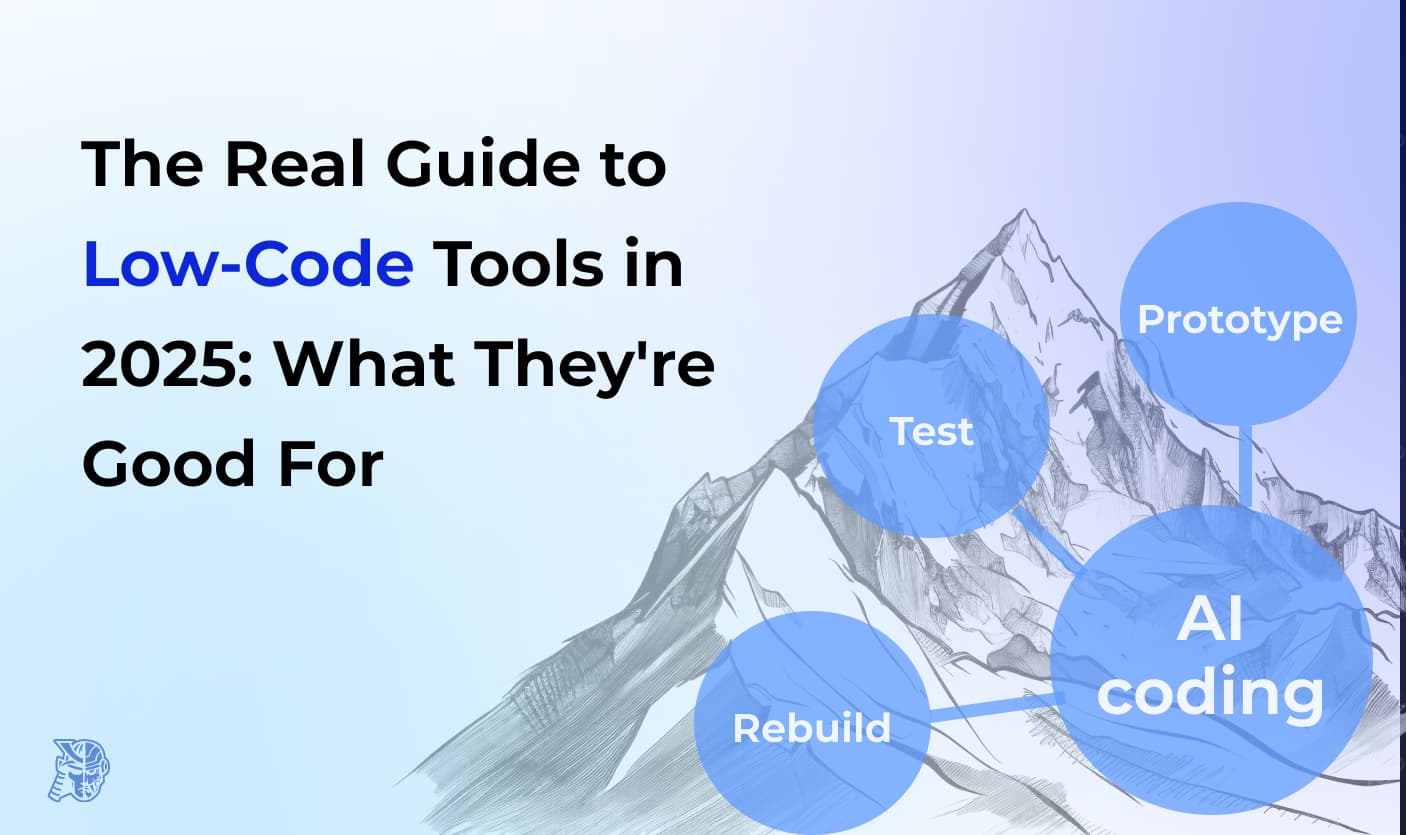
- Prototype with something like Lovable or Bolt — fast UI validation.
- Test logic and data using Firebase or Replit backends.
- Rebuild the core stack in production-ready tech once we confirm traction.
It's about momentum, not maintenance.
We combine the speed of low-code with the control of full-stack — giving founders the best of both worlds without getting trapped in either.
Inside Each Tool — The Honest Breakdown
Replit
Replit is for builders, not founders. It's a powerful environment for experimenting, learning, and building quick MVPs with AI code assist.
But it's still real coding — meaning if you're not technical, it's not a shortcut, it's a sandbox.
Perfect for developers prototyping. Useless for scaling production apps.
Lovable
Lovable's great for visual thinkers — it lets you go from concept to functioning prototype without design skills.
It's fast and beautiful but lacks backend sophistication.
Your app will look ready long before it's truly functional.
Firebase Studio
Firebase is a powerhouse under the hood. It automates backend logic, authentication, and data management beautifully.
But it's not low-code in the true sense — you'll still need front-end engineers to connect and style everything.
It's best for hybrid teams or startups with one technical founder.
Bolt AI Builder
Bolt's promise: 'AI builds your app.' It's half true — it builds the shell of your app. But real business logic still requires human development.
Think of it as scaffolding, not architecture.
Natively
Natively is strong for mobile-first products — smooth UX, instant previews, and real app exports.
But there's no backend. It's basically a glorified design layer until paired with something like Firebase or Supabase.
Emergent & Base44
These are the 'corporate low-code' players. They build secure, compliant internal tools for enterprise data handling — not public-facing apps.
They're powerful but expensive and rigid. Great for internal dashboards, not creative products.
The Hidden Problem: Ownership
Every low-code platform has one dangerous clause in the fine print — they own the infrastructure.
Your 'app' technically lives on their servers, runs on their stack, and depends on their updates.
If they change terms, pricing, or go down — so does your business. You can't export true ownership from a closed system.
That's why every JunziTech build ends with you owning the repo, infrastructure, and deployment keys. Freedom by default.
Why Low-Code Isn't Competing With Developers — It's Competing With Time
Low-code isn't replacing engineers; it's replacing the wait. It's the gap between idea and execution.
Used properly, it buys you time to test before committing to a full build.
Used poorly, it traps you in a tool you outgrow before launch.
The key is knowing where it ends.
A Founder's Lesson
I've seen founders build half a company on a low-code platform and realize — too late — that they can't export anything.
They had traction, users, and paying customers… and no way to scale or migrate.
We rebuilt it from scratch in six weeks for less than what they were paying monthly in low-code subscriptions.
That's when I started telling founders the truth:
'Low-code isn't the product. It's the warm-up set before the real lift.'
JunziTech's Approach: Bridging Low-Code and Real Engineering
Our philosophy is simple:
- Move fast early.
- Don't get trapped.
- Rebuild before you break.
We start every project by identifying which components should be low-code and which should be fully custom.
Then we migrate gradually, so you keep your progress — not restart it.
That's how you go from 'built on Replit' to 'live on AWS' without losing time or momentum.
Key Takeaways
✅ Low-code is amazing for validation, not for scaling.
✅ You still need real developers to go beyond templates.
✅ Every low-code tool has hidden walls — speed first, limits later.
✅ Smart founders use low-code for proof, not production.
✅ The real win is hybrid: low-code to start, custom to last.
Closing: Build Fast, But Build Smart
The future of software isn't low-code or high-code — it's right-code.
Use whatever gets you to market fastest without handcuffing your growth later.
Low-code is a spark plug — it ignites the engine. But if you try to run the whole race on it, you'll burn out before the first lap.
At JunziTech, we use low-code strategically, rebuild intelligently, and launch products that actually scale.
Because the goal isn't to build without developers. The goal is to build without excuses.
JunziTech Solutions — Built by founders, for founders.
We don't hack. We accelerate.